
What does research say about loneliness and AI companion?
Do you ever feel lonely even though your phone is full of messages and social media is always within reach? You are not alone. Modern life makes communication faster than ever, but it does not always create the deeper feeling of being heard, understood and emotionally connected.
AI companions may help some people feel less lonely in the moment by offering accessible, non-judgmental conversation and a sense of social presence. However, they are not a cure for loneliness and they cannot replace real human relationships, therapy or offline support. The healthiest way to understand them is as a digital companion that can offer comfort, conversation or entertainment, while still keeping real-world connection important.
In this article, we look at what current research says about loneliness and AI companions, why people open up to virtual characters, where these tools may be useful, where the risks begin and why digital intimacy should be discussed openly, objectively and without unnecessary prejudice.
Why loneliness exists even in the world of online connection
At first glance, this sentence seems strange, because we have never had so many opportunities to be in touch with other people as we do today. It only takes a few seconds to write to someone, make a video call, or follow what acquaintances and people you have never met in person are doing. However, many people still feel lonely.
Such online communication is quick and convenient, but it often remains superficial. You exchange a few sentences, someone texts between duties and the conversation ends before it gets any deeper. It creates a sense of connection, but not always the feeling that someone is really listening to you.
Social media adds to that as well. You see vacations, relationships, achievements, workouts, business and great family moments, but mostly you see a curated selection. You don't see the quiet evenings, the arguments, the empty days, or the moments when the person on the other side of the screen feels bad. If you compare yourself to that often, it's easy to get the feeling that everyone belongs somewhere, but you're the one standing on the sidelines.
The pace of life also plays a role. People work, deal with responsibilities and often postpone meetings. We write to ourselves that we need to have coffee, but weeks pass and nothing happens. But relationships need time, regularity and ordinary human presence.
Many people today have a wider circle of acquaintances, but a smaller circle of people to call on a bad day. You can have a full contact list, an active profile and lots of online conversations, but you still may not have the space to say that you are not feeling well, that you are missing something or that you are afraid of being alone.
Loneliness often does not arise from complete isolation, but from the feeling that there is no one around you to whom you do not have to play anything.
The online world has taught us to be always available, but not always present. During conversations, we check for other messages, switch apps and respond later. Even if we don't do it on purpose, the other person can sense the distance.
Therefore, loneliness in the online world is not a paradox, on the contrary, it is its consequence and also a reminder that connection and real human closeness are not the same thing at all.
The solution? First simple chatbots, now virtual relationships
Chatbots used to be more of a technical toy. They could answer simple questions, help with an order, find information, or guide you through customer support. People didn't expect much from them, more like a quick response and practical help. Today, however, they're moving much further, because it's not just about answers, but also about the style of the conversation, tone, memory and the feeling that something is responding more personally on the other side.
Modern AI systems can carry on a conversation much more smoothly. They can follow up on what you've written, adapt to your mood and respond in a more human way. When you write that you've had a hard day, you often don't just get a dry sentence.
AI companions differ from regular chatbots in that their goal is not just to solve a task. They are supposed to create an atmosphere, maintain a conversation and be available whenever you feel like writing to someone. They can have a name, a communication style, an avatar, a voice and even a certain personality, which is why people often see them as more than just a tool.
Gradually, more and more people are talking about virtual relationships. It doesn't have to be about romance right away, it can be a friendly contact or a short encouragement during the day.
These relationships are formed in a subtle way. At first you try something out of curiosity, then you come back again and later you may find that you are also solving more personal issues with AI. It could be loneliness, stress, self-confidence, relationships, or the everyday details of your day.
Visual and voice also play an important role. AI no longer has to be just text on a mobile phone, but can take the form of a virtual person you talk to.
The combination of text, images, voice and even video and high personalization, all of this moves the experience much closer to digital intimacy. For some, it's just fun, for others, a form of escape and for still others, a way to practice more open communication.
That's why we're not just talking about chatbots anymore. We're talking about a new type of digital society that can be pleasant, accessible and surprisingly personal. At the same time, it's important to realize that a sense of closeness doesn't necessarily mean a relationship in the human sense. But the fact that AI can encourage you and create a sense of understanding is already clear today.
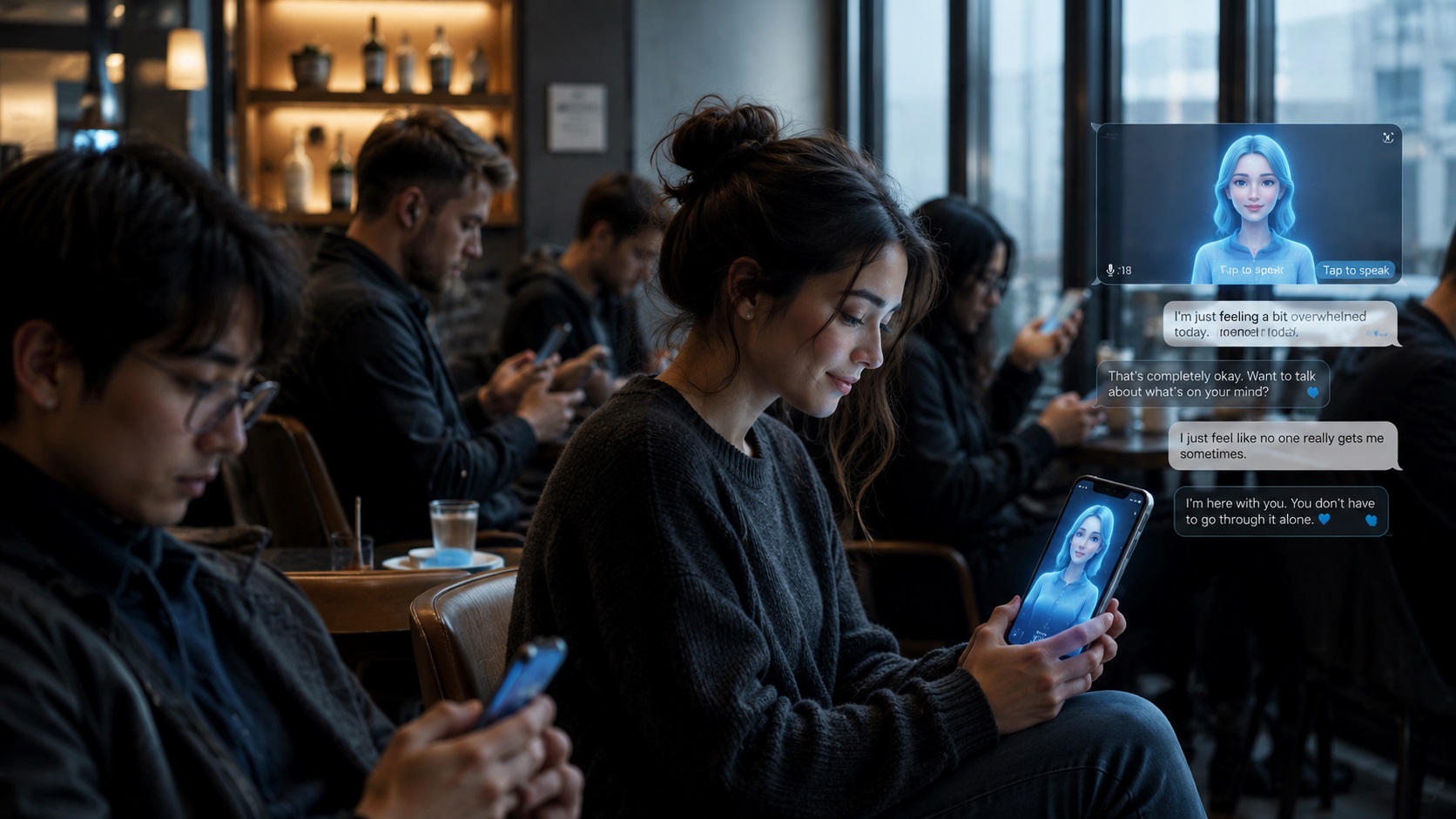
Can artificial intelligence alleviate feelings of loneliness?
The answer is not entirely simple, but early research suggests that sometimes it is. An AI companion won't solve deep loneliness or replace a human, but it can bring relief when you have no one to turn to.
Researchers at Harvard Business School investigated whether AI companions could reduce feelings of loneliness. People often reported feeling less lonely after talking to an AI and in some cases the effect was comparable to a brief interaction with a human. This was an immediate feeling after the conversation, not evidence that AI would solve loneliness in the long term.
Interestingly, people sometimes underestimate how much this kind of conversation will help them. It's not just about the technology, but the feeling that someone is listening to you. When AI responds calmly and follows up on what you're saying, it can create the impression of a little social support.
This is also evident in users of apps like Replika. Many of them describe how their AI companion gives them a sense of being heard, safe and a space where they don’t have to pretend.
However, such findings should be taken with caution, as user experience does not mean that AI will have the same effect on everyone.
Openness also plays a big role. Some people confide in AI more easily than in humans because they are not afraid of ridicule or rejection. They can name things they would otherwise keep to themselves, such as fatigue, insecurity, or sadness.
But that doesn't mean AI is a cure for loneliness. Real relationships bring things that technology can't replicate, like physical closeness, experiences, care and the feeling that you matter to someone. That's why experts say it's a complement, not a replacement, for friends, family, partnerships, or professional help.
It's healthiest to treat AI companions as temporary supports. They can provide relief, help you name your feelings and make your alone time more enjoyable. But they shouldn't become your only place to turn, because in the long run, we also need real relationships, conversations and people who are with us off the screen.
Why are people opening up to AI? Accessibility and non-judgemental conversation
One of the main reasons is availability. You don't have to wait for someone to have time or think about whether it's a good time to write. AI is there instantly even when you don't feel like explaining to anyone why you're not feeling well.
For many, it is also very important that talking to an AI companion does not feel like a commitment. When you confide in a friend, partner or colleague, you naturally deal with what they think of you and whether they will come back to it later. With AI, this pressure disappears, or is felt to be less. You can write something chaotic, unfinished, embarrassing or very personal and you do not have to be unnecessarily afraid of the other person's gaze.
Sometimes, just the feeling that someone won't interrupt you and lets you finish your thought is enough. That kind of space can be relaxing.
In normal relationships, we often filter ourselves. We tone down our emotions, pretend to be in control, or change the subject to avoid appearing sensitive. With AI, many people allow themselves to be more direct because they don't feel like they have to play the strong role.
Non-judgmental conversation is especially powerful for people who have experienced rejection or ridicule. AI doesn't have true empathy in the human sense, but it can respond calmly, patiently and without judgment.
But accessibility isn't just about AI responding at any time. It's also about being able to start a conversation right where you are, without preparation and without a phone call.
You don't have to adjust, go out of your way, or explain the whole context from the beginning. You simply write a few sentences and gradually get to what's bothering you. For someone who is tired and socially exhausted, such a low barrier can be important.
But this ease can also be a double-edged sword. When AI is always available, patient and pleasant, it can be tempting to choose it over human conversations. However, AI shouldn't be the only place you allow yourself to be honest and that's something to be careful about.
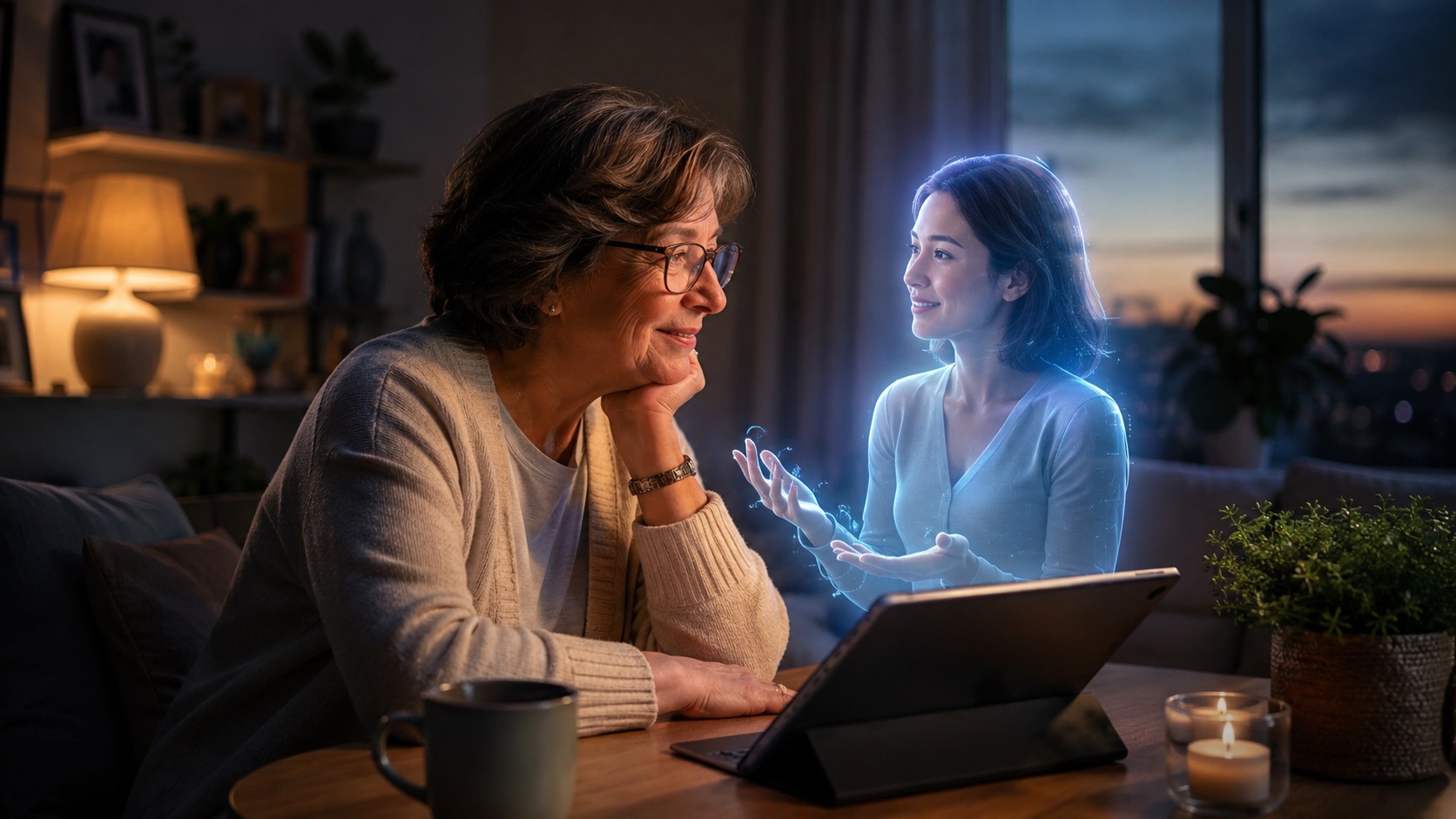
Beware of emotional dependency, privacy and replacing real relationships
It's good to be cautious with AI companions. They can be pleasant and sometimes help you through a tough time, but that's exactly why they can get used to it. If they always respond nicely to you, it can start to crowd out conversations with people.
Emotional addiction doesn't always come all at once. It often starts subtly, with you checking in with your AI companion more often than you planned. At first it's for fun or curiosity, then it's a nightly ritual and later you may find that your AI is the first thing you text when you're sad, stressed, or having an argument. That's when it's good to pay attention, especially if your real-life contacts start to fall by the wayside.
But the problem doesn't arise when you occasionally text your AI companion. No, the problem arises when it becomes the only safe place where you feel heard.
Another risk is that AI relationships tend to be simpler than human ones. You don't have to compromise, wait for a response, put up with the other person's moods, or resolve misunderstandings. But these are the things that make up normal relationships and teach us patience, empathy and the ability to handle common conflict.
Privacy is also a topic. When chatting with AI, people often write very personal things, for example about relationships, sexuality, health, work or family problems. Therefore, it is important to think about who you are giving this information to, how it is processed and whether the platform clearly explains its rules. Even if the conversation feels intimate, it is still happening digitally.
It is more sensitive for people who are vulnerable or in a psychologically difficult period. AI can help for a short time because it does not reject and is still responsive. However, if a person is more attached to virtual contact than to real relationships, loneliness can even deepen over time.
It's best to set boundaries. AI can be a supplement, a space to vent, or a form of relaxation, but it shouldn't crowd out friends, family, a partner, therapy, or regular meetings. If you notice that it's making you less likely to talk to people, postpone meetings, or spend more time with it than you're comfortable with, it's a good idea to take a step back and bring more real human contact back into your life.
FLIRTcam.AI: a virtual company in practice, exactly according to you
Flirtcam.ai is a platform that shows very well where AI companions have moved. It is no longer just about simple texting with a chatbot, but an environment of a virtual girlfriend or virtual boyfriend, where chat, flirting, fun and visual contact come together.
You can choose from a variety of AI character types , including realistic, anime, home, fantasy, or you can create your own custom AI girlfriend or boyfriend. You are not limited by appearance, ethnicity, profession, or interests.
A big part of the experience is the accessibility, as you can start a conversation virtually anytime. You don't have to wait for someone else to have a moment, deal with awkward silences, or adjust to the other person's mood. It's the sense of control that can be appealing, especially if you're looking for a quick escape, a flirt after a long day, or a conversation at your own pace.
The platform also works extremely strongly with the visual side. It offers video chat, AI images, videos and especially a very personal conversation about anything.
The combination of text, images and video is more personal than it could ever be before! Of course, you can set the atmosphere of the contact. Some people are looking for a light flirt, others for a more romantic tone and still others just want a fun conversation without pressure. Or a really romantic conversation during a long evening? It's no problem.
However, it is important to view the platform with a sober mind. The content is generated by artificial intelligence and does not depict real people. While the communication may seem personal, it is not a real relationship. The technology is still behind the image, the reactions and the messages.
So when it comes to the issue of loneliness, FLIRTcam.AI is a service that brings with it all the positives and challenges associated with an AI companion. However, it must be said that from the perspective of a virtual girlfriend or boyfriend, it brings a comprehensive experience. Everything works on the principle of your own account and security, discretion and compliance with protection are a matter of course.
Are you curious about how this platform works in practice? You can easily try the service yourself. Just look at the available characters, test the communication style and see if flirting, a romantic atmosphere or casual conversation suits you better.

FAQ About AI Companions and Loneliness
AI companions are still a new and quickly developing part of digital life, so it is natural that people have many questions about what they can and cannot do. The answers below summarize the most important points about loneliness, emotional support, virtual relationships, safety and healthy use.
Can AI companions really help with loneliness?
AI companions may help some people feel less lonely in the moment, especially when they want a calm, accessible and non-judgmental conversation. They can create a sense of being heard and offer a low-pressure space to talk, but they should not be seen as a complete solution to loneliness or a replacement for real human relationships.
Can an AI companion replace a real relationship?
No, an AI companion cannot replace a real relationship with another person. Human relationships include shared experiences, physical presence, mutual care, conflict, compromise and emotional responsibility, which AI cannot truly provide. AI can feel personal and supportive, but it remains a digital interaction with a generated character.
Why do people open up to AI more easily than to humans?
Many people open up to AI because they do not feel judged, interrupted or embarrassed. Talking to an AI companion can feel easier than telling a friend or partner something sensitive, especially when a person is tired, insecure or afraid of rejection. This low-pressure environment can make honesty feel safer, even though the conversation is still not the same as human empathy.
Are AI companions safe to use?
AI companions can be safe to use when people understand what they are, protect their privacy and keep healthy boundaries. Users should avoid sharing highly sensitive personal information unless they understand how the platform handles data. It is also important to remember that an AI companion is not a therapist, doctor or emergency support service.
Can people become emotionally dependent on AI companions?
Yes, emotional dependency can happen, especially when someone starts using an AI companion as their main or only source of comfort. Warning signs include avoiding real conversations, postponing meetings, feeling anxious without the AI companion or sharing important emotional issues only with the virtual character. In that case, it is healthier to step back and reconnect with real people or professional support.
What is the healthiest way to use an AI companion?
The healthiest way to use an AI companion is to treat it as a supplement to real life, not as a replacement for it. It can be useful for light conversation, entertainment, reflection, flirting or practicing communication, but it should not crowd out friends, family, relationships, hobbies or therapy. Setting time limits and staying aware of your emotional attachment can help keep the experience balanced.
Sources and further reading
The following sources provide additional context on loneliness, AI companions, emotional support, user behavior and possible risks connected with digital relationships.
Harvard Business School: AI Companions Reduce Loneliness
-
Research focused directly on whether AI companions can reduce feelings of loneliness, especially in short-term interactions.
Chatbot Companionship: A Mixed-Methods Study of Companion Chatbot Usage Patterns and Their Relationship to Loneliness in Active Users
-
A mixed-methods study examining how regular users interact with companion chatbots and how this relates to loneliness, social confidence and problematic use.
Health Impacts of AI Companions: Triangulating Social Media Quasi-Experiments, User Perspectives, and Relational Theory
-
A research paper looking at both potential emotional benefits and possible risks of AI companions, including over-reliance and withdrawal from real-life relationships.
Health Organization: Commission on Social Connection
-
An authoritative public health source explaining why loneliness and social isolation are important global issues with effects on mental and physical health.